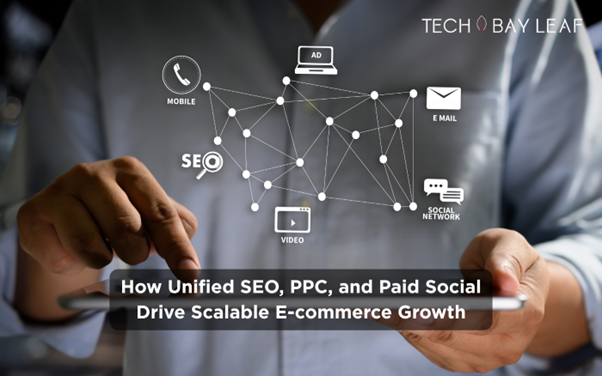
Most brands still manage SEO, PPC, and paid social in silos, each with its own teams, budgets, and KPIs. This fragmented approach wastes ad spend, drives inconsistent messaging, and limits growth potential. A unified marketing strategy changes that. By connecting SEO, PPC, and paid social into a single integrated SEO PPC strategy, brands can reduce CAC (Customer Acquisition Cost), increase ROAS (Return on Ad Spend), and improve long-term profitability.
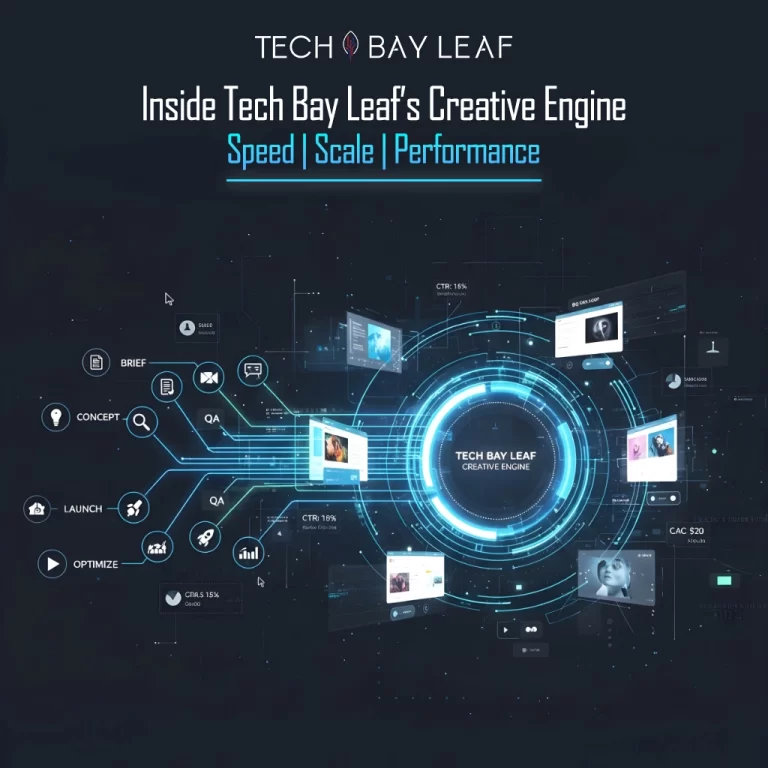
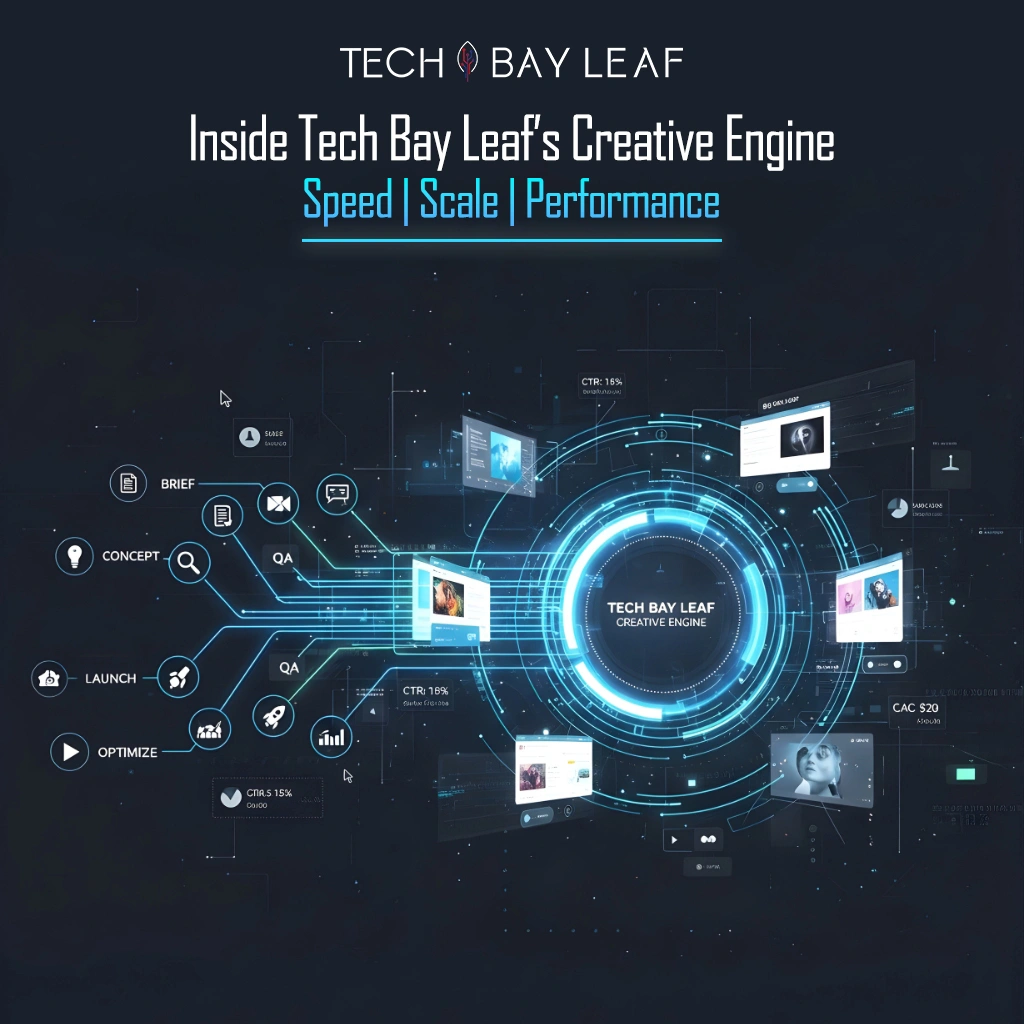
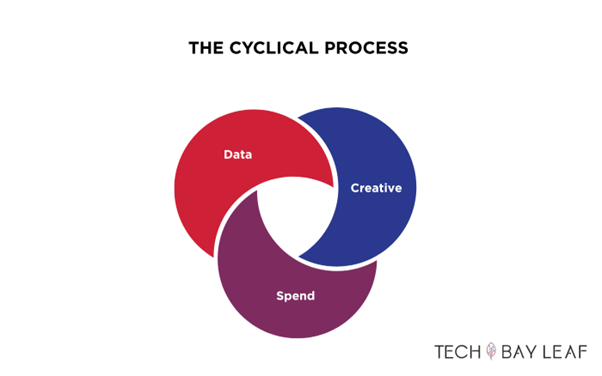
This is the foundation of the TBL Integrated Growth Engine – a performance model built on cross-channel performance marketing with a 90-day blueprint. It combines data, creativity, and spend into one feedback loop to accelerate e-commerce growth.
The Integrated Growth Loop — Data, Creative, and Spend Working as One
Step 1: Capture Demand with SEO
SEO remains the foundation of sustainable e-commerce growth. It builds authority, visibility, and organic traffic — the long-term fuel for brand success.
By aligning SEO and paid media integration, brands can use real-time PPC insights (CPC, CTR, and conversion rates) to refine keyword targeting and optimize on-page content. Over time, this combined SEO and PPC strategy lowers dependency on paid ads while capturing high-intent organic traffic.
Example: An e-commerce growth marketing agency discovered that top-performing PPC keywords also drove strong organic conversions. By integrating those terms into product pages, the brand’s organic traffic grew 42% while maintaining lower CAC.
Step 2: Convert High-Intent Traffic with PPC
PPC advertising converts existing demand. It captures ready-to-buy users searching for specific products or brands. But when managed in isolation, PPC data often goes underutilized.
Through SEO, PPC, and paid social integration, brands can leverage shared data to:
- Test keywords before rolling them into SEO strategies.
- Identify profitable search terms and audiences faster.
- Maximize conversions during high-intent moments.
This alignment ensures paid media dollars not only drive immediate sales but also inform future organic growth strategies.
Proof: TBL’s integrated campaigns achieved a 39% reduction in CAC and a 48% lift in lead volume, showing how an integrated ad operations approach fuels efficiency and growth.
Step 3: Create Demand with Paid Social
Paid social doesn’t just promote — it creates demand. It expands reach, introduces products to new audiences, and generates data-rich engagement signals that inform both SEO and PPC. A DTC performance marketing agency can use insights from social ad performance (top-performing headlines, visuals, and CTAs) to influence both SEO metadata and PPC ad copy. This leads to a consistent, high-converting message across all channels.
Example: For a beauty DTC brand, Paid Social insights inspired ad copy that later became SEO meta titles – doubling CTR across both channels.
Step 4: Feed Learnings Back into SEO and Creative Testing
The most powerful part of a cross-channel performance marketing model is its feedback loop. Data from SEO informs paid social creative testing, while PPC campaign results refine keyword strategies and content direction.
This cyclical process — Data → Creative → Spend → Data — creates an ongoing optimization engine that continuously enhances performance, reduces waste, and strengthens brand equity.
Over time, this loop forms the backbone of an e-commerce growth framework. One where every channel learns from the others, and every dollar works harder.
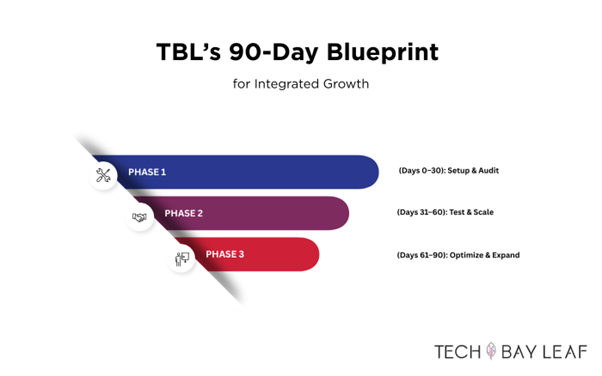
At Tech Bay Leaf, we don’t just talk integration; we build it into a proven 90-day performance framework that scales results fast.
Phase 1 (Days 0–30): Setup & Audit
- Conduct deep-dive audits of SEO, PPC, and paid social performance.
- Build a creative hypothesis backlog to test audience resonance.
- Align tracking, analytics, and attribution for full-funnel visibility.
Phase 2 (Days 31–60): Test & Scale
- Launch synchronized SEO content clusters, PPC campaigns, and paid social ads.
- Implement LTV-aware bidding strategies for smarter spend allocation.
- Optimize creative performance based on engagement and conversion data.
Phase 3 (Days 61–90): Optimize & Expand
- Refine channel budgets for maximum efficiency.
- Feed learnings into SEO content planning and paid creative.
- Scale winning campaigns and expand audience reach across platforms.
This 90-day roadmap transforms siloed efforts into an integrated growth engine. Powered by data, creativity, and precision execution.
Building Your Unified Growth Engine
Modern e-commerce success isn’t about choosing between SEO and PPC; it’s about integrating them seamlessly alongside paid social. A performance marketing agency in the USA that offers integrated digital marketing services can unify analytics, audience targeting, and creative strategy across all three.
The result?
- Lower acquisition costs (reduce CAC eCommerce)
- Higher advertising efficiency (increase ROAS eCommerce)
- Consistent brand visibility across every touchpoint
By adopting a unified marketing strategy through integrated SEO, PPC, and paid social, brands can scale profitably and sustainably — turning fragmented data into a single growth engine that drives long-term success.