In a world overflowing with content, it’s getting harder than ever to grab—and hold—people’s attention. We’ve all seen it: flat images and static descriptions that just don’t cut through the noise. At Tech Bay Leaf, we believe the future of product marketing lies not in showing more, but in showing better. That’s why we’ve made 3D modeling and animation central to the way we help brands communicate their ideas.
We’re not just playing with pretty pixels—we’re changing the way products are experienced, remembered, and emotionally connected with. Here’s how we’re doing it, and why it matters.
Visual Storytelling Has Evolved—and So Have We
Marketing has always been visual at its core—from newspaper spreads to digital ads—but it’s mostly stayed two-dimensional. That’s where 3D product visualization comes in, adding depth, realism, and interaction that traditional formats simply can’t match.
With 3D modeling, we can render products with photorealistic precision. You can explore them from every angle, see every texture, every button, every curve. And when we add animation? That’s when products truly come to life, showing functionality, movement, and use cases that static photos can’t touch.
Industries like automotive, fashion, electronics, and furniture thrive on aesthetics and utility. Through 3D, we’re helping brands in these sectors tell compelling, informative stories that drive results.
Why 3D Content Outperforms Traditional Media
We’ve seen firsthand how 3D modeling and animation boost marketing effectiveness. The benefits are impossible to ignore:
- Higher engagement: Interactive 3D models let users zoom, rotate, and explore. This keeps them on-page longer and increases the chances they’ll convert.
- Faster decision-making: Customers understand what they’re buying. No surprises, no confusion—just confidence.
- Stronger storytelling: We animate narratives that explain benefits, features, or scenarios better than text or images ever could.
- Cost-effectiveness: 3D assets are versatile. Once created, they can power websites, AR, virtual stores, launch videos, and even social media—all from the same core visuals.
But here’s the thing: not all 3D content is created equal. It takes more than just great rendering. It takes strategy, storytelling, and technical precision. That’s where we come in.
Blending Artistry with Functionality
We treat 3D modeling as a communication tool, not just an aesthetic exercise. Every product has a story, and our job is to tell it, emotionally and accurately.
We work end-to-end. That means we don’t just model something and hand it off. We collaborate deeply with engineers, marketers, and UX teams to make sure what we’re creating doesn’t just look good, but truly reflects how the product functions and feels.
Our portfolio spans everything from industrial systems to lifestyle electronics. And whether it’s for an internal demo or a public campaign, our approach is always the same: clarity, craftsmanship, and connection.
Where 3D Is Taking Us—and Our Clients
Here’s how we’re using 3D modeling and animation to push boundaries across different touchpoints:
E-Commerce
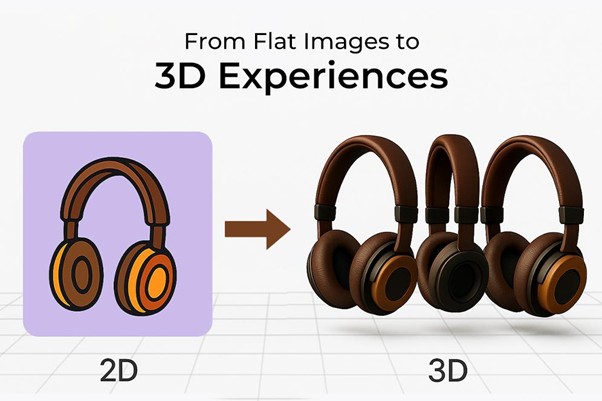
Platforms like Amazon and Shopify now support 3D product views, and early adopters are already seeing the difference. We help brands move from flat images to immersive, interactive product pages—optimized for speed, beauty, and customization.
Augmented Reality (AR)
AR is no longer optional—it’s expected. Our 3D models are built for tools like Apple’s ARKit and Meta’s Spark AR, allowing users to place products in their real-world spaces. Want to see how that couch looks in your living room? Or how those sneakers fit your style? Done.
Virtual Product Launches
In the post-pandemic world, virtual is the new normal. We’ve created animated launch videos, interactive walkthroughs, and digital simulations that make product debuts just as impactful as in-person events—if not more so.
Internal Training & Demos
3D isn’t just for the public. We work with internal teams to create animated explainers, training modules, and modular assets that help sales and development teams understand—and articulate—what a product does, and why it matters.
Humanizing Technology
What makes our work special isn’t just technical skill—it’s empathy. In a space often dominated by specs and data sheets, we focus on how our visuals make people feel. Every reflection, texture, and animation curve is crafted to create emotional resonance.
Clients often describe our projects as “living brochures”—not just things you see, but things you experience. That’s the power of combining storytelling with high-fidelity 3D.
What’s Next: AI, Real-Time Rendering, and the Metaverse
Looking ahead, we’re already experimenting with some exciting frontiers. Real-time rendering engines like Unreal and Unity, AI-generated assets, and metaverse platforms are redefining what’s possible.
We’re developing adaptive product visuals that respond to voice commands and cloud-based configurators where users can collaboratively build their ideal product. The goal? Personalized, intelligent, immersive product experiences at scale.
Final Thoughts
At Tech Bay Leaf, we believe that in today’s crowded digital world, success doesn’t come from being louder. It comes from being clearer, smarter, and more immersive. 3D modeling and animation allow us to do just that.
We’re not just showing products—we’re showing their potential. And in a market where the line between physical and digital is blurring fast, we’re proud to help our clients stand out, connect deeply, and lead the way forward.
Let’s build the future of product marketing—one pixel, frame, and story at a time.